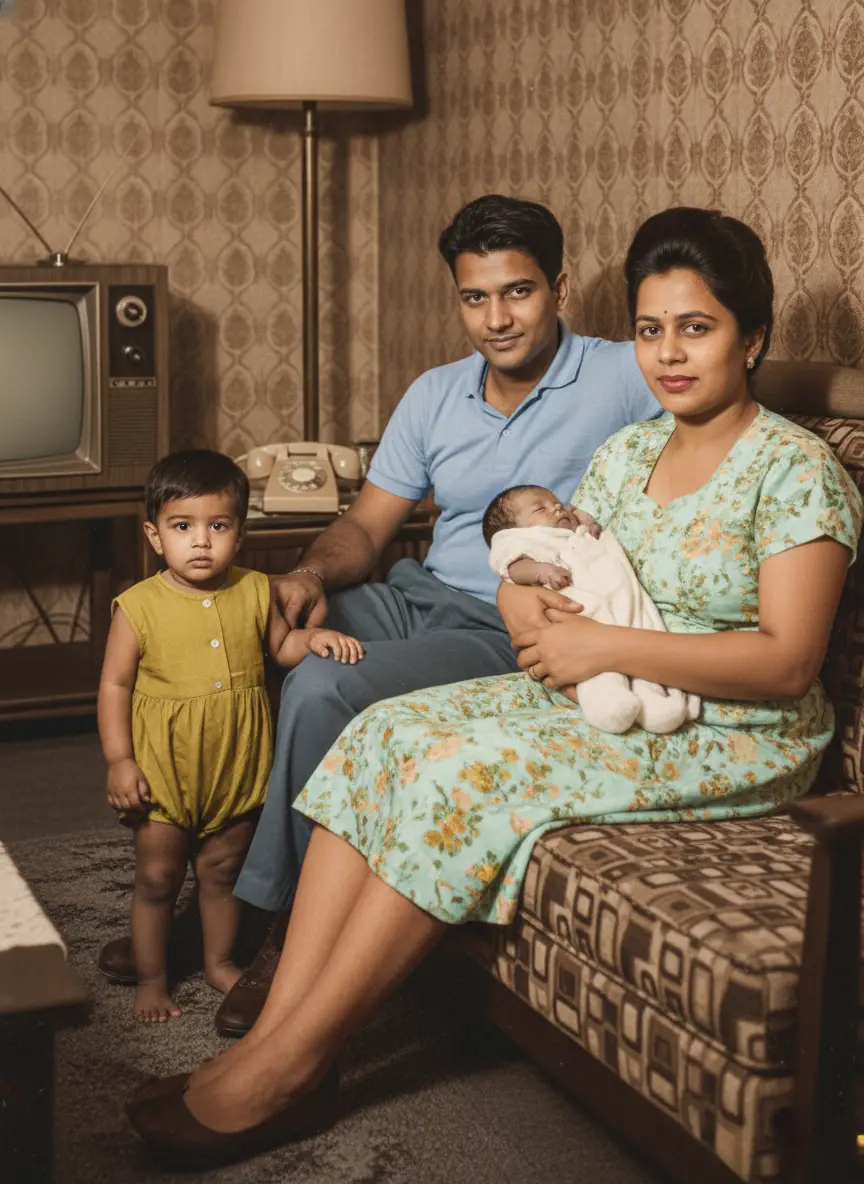
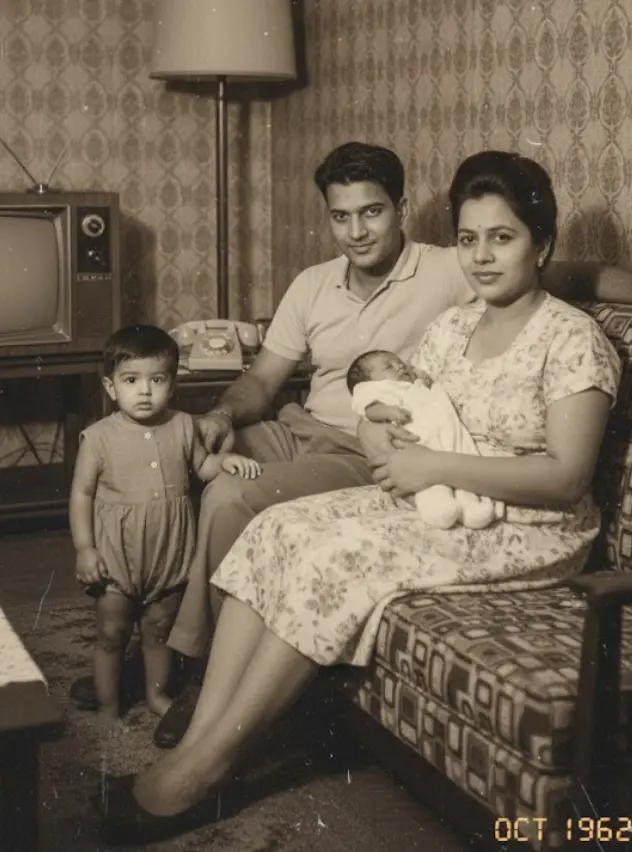
AI photo restoration is a digital process that uses deep learning algorithms to repair and enhance damaged images. This AI photo restoration technology aims to automatically remove scratches, fading, and discoloration, effectively tackling damaged photo restoration by intelligently reconstructing missing or imperfect visual data. The underlying photo restoration algorithm processes flaws like blur and tears, bringing old images back to life.
Key Characteristics:
- Automated Repair: AI algorithms identify and correct various image imperfections.
- Deep Learning Core: Uses Generative Adversarial Networks (GANs) and diffusion models to reconstruct details.
- Time Efficiency: Transforms manual tasks that took hours into seconds or minutes.
- Flaw Coverage: Addresses scratches, fading, blur, tears, and color absence.
Seeing cherished family photos fade, torn, or covered in scratches feels like losing a piece of history. These images hold priceless memories, moments that connect us to our past. Yet, the physical damage often makes them difficult to truly appreciate or share, leaving a feeling of irreversible loss.
This guide helps you understand how an AI photo restoration algorithm actually works to recover those images. By the end, you will grasp the underlying technology for damaged photo restoration and remove scratches from your own photos, without resorting to expensive, time-consuming manual efforts.
What is AI Photo Restoration and Scratch Removal?
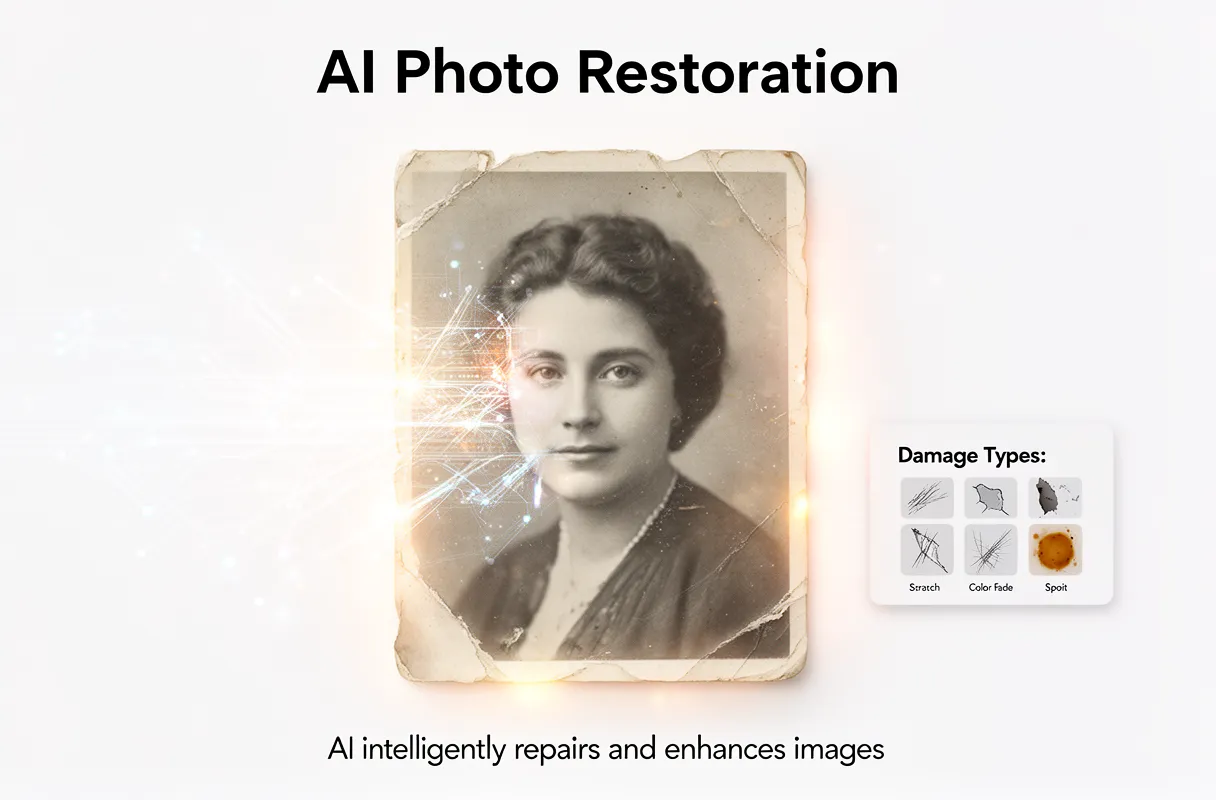
These algorithms are designed to tackle a range of image degradation. They work by analyzing the existing pixel data and intelligently reconstructing what's missing or damaged. This means old, cherished photographs can be revived without the need for extensive manual editing.
AI excels at repairing various types of photo damage, including:
- Scratches and tears
- Fading and discoloration
- Dust and spot marks
- Blurriness and lack of sharpness
- Absence of color in black-and-white photos
The fundamental shift is from time-consuming, manual techniques to automated processes. Where once a single photo might take hours to restore, AI tools can now fix many images in minutes. For a deeper dive into the fundamental concepts of AI photo restoration, explore our comprehensive guide on the power of AI in reviving memories. This technology fundamentally changes how we preserve our visual history, making it more accessible than ever.
The Evolution of Digital Image Repair
The journey of digital image repair traces back to early computer graphics. Initially, fixing damaged photos meant painstaking manual work. Experts used software like Adobe Photoshop, meticulously cloning pixels, retouching blemishes, and painstakingly recoloring faded areas. This process was incredibly time-intensive, often taking hours or even days for a single photograph.
This manual approach dominated for years. Then, the emergence of machine learning began to shift the paradigm. Algorithms started to learn patterns from vast datasets of images. This laid the groundwork for automated repair. The historical timeline of AI photo restoration truly accelerated with the advancements in deep learning and increased computational power.
The true revolution arrived with AI-driven techniques. These intelligent systems can now analyze an image, identify damage like scratches, tears, and fading, and intelligently reconstruct missing information. This represents a fundamental shift from traditional photo restoration, drastically reducing processing time from days to mere minutes per image. This evolution makes preserving our precious memories more accessible than ever before.
How AI Algorithms Reconstruct Damaged Photos?
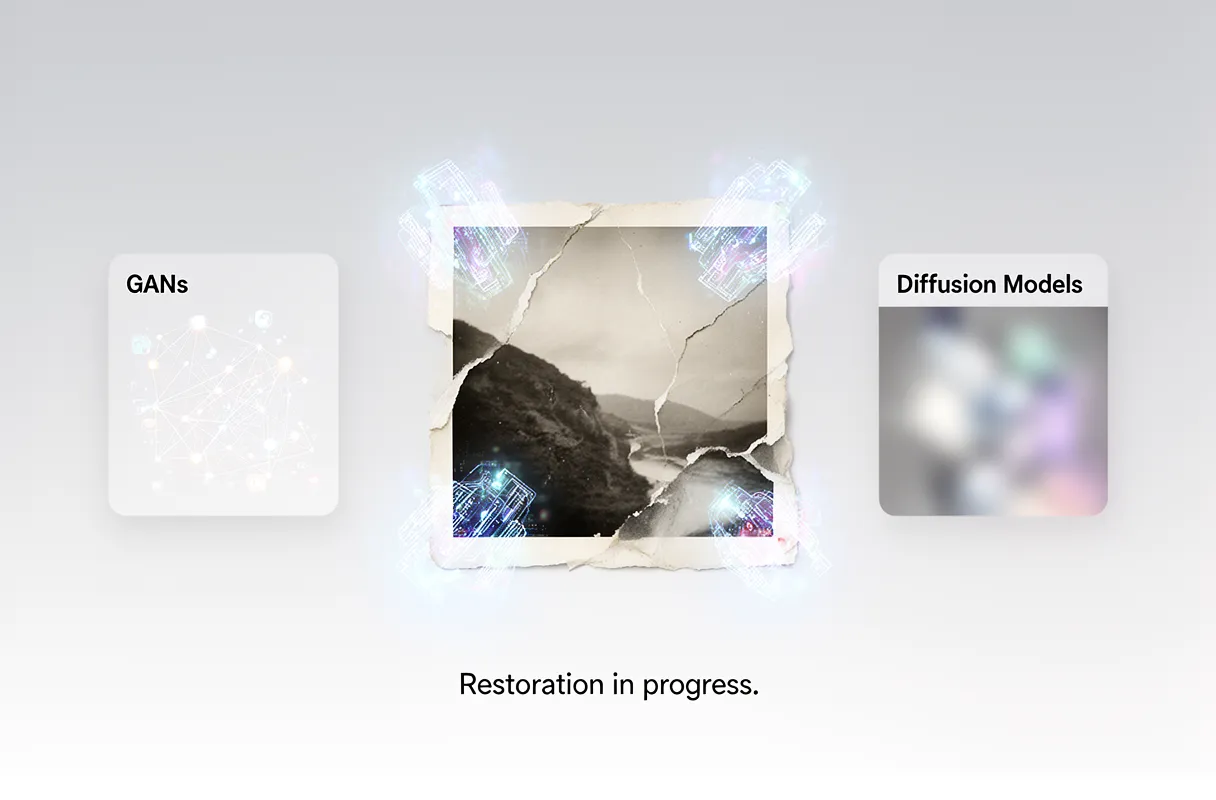
GANs work by pitting two neural networks against each other: a generator, which creates new image data, and a discriminator, which tries to distinguish between real and generated data. Through this adversarial process, the generator learns to create highly realistic pixels that blend seamlessly with the original image content. For complex regeneration, multiple GAN frameworks can be sequentially integrated, alongside inpainting techniques often based on OpenCV for partial image restoration after initial scratch patching. This approach is detailed in research on sequential GAN frameworks.
Diffusion Models, on the other hand, reconstruct missing information by iteratively refining noisy images. They start with a degraded image, add noise, and then learn to reverse this process, gradually removing noise to reveal a clean, reconstructed version.
Here's a look at how these core technologies compare:
| Feature | GANs for Image Restoration | Diffusion Models for Photo Repair |
|---|---|---|
| Mechanism | Adversarial training (generator vs. discriminator) to create realistic pixels. | Iterative denoising process, learning to reverse noise addition to reveal clean data. |
| Strengths | Can produce sharp, detailed results; good for generating novel content and texture. | Excellent at generating high-fidelity and diverse outputs; often more stable training. |
| Weaknesses | Can be prone to training instability and "mode collapse" (limited output variety). | Can be computationally intensive and slower for inference due to iterative steps. |
| Primary Use | Filling large missing areas, creating realistic textures, and enhancing detail. | High-quality image synthesis, background generation, and advanced restoration tasks. |
An image typically takes 3 to 5 minutes to process with AI restoration tools; smaller images or those with fewer faces process faster. This is similar to how a skilled artist might carefully reconstruct a torn canvas, imagining the missing brushstrokes based on the surrounding details and their understanding of the overall artwork. Understanding how AI can mend various forms of damage helps us appreciate the sophistication of these reconstruction methods.
Specific Techniques for Scratch Elimination
Scratch removal algorithms adapt to various scratch types by first identifying their characteristics. Fine scratches, often mere surface abrasions, require delicate texture reconstruction. Deeper, more prominent scratches demand more aggressive artifact removal and content-aware filling. Algorithms analyze color shifts and textural disruptions to classify the damage.
To tackle these imperfections, sophisticated techniques are employed. Scratch distribution extraction helps pinpoint all affected areas. Then, Gaussian blur maps are generated to isolate the scratch regions from genuine image content. This map guides the AI in knowing where to apply repair and how intensely. The AI effectively "paints over" the scratch, blending new pixel data with the surrounding image's color and texture.
Evaluating these methods relies on quantitative performance metrics. Scores like PSNR (Peak Signal-to-Noise Ratio), SSIM (Structural Similarity Index Measure), and FID (Fréchet Inception Distance) help measure the quality of the restoration. Higher PSNR and SSIM indicate better fidelity, while lower FID suggests the restored image is more statistically similar to real images.
Advanced tools ensure lossless restoration capabilities, meaning your original photo's resolution isn't compromised. Many services also offer practical user limits, such as free processing for images up to 3000x3000px and under 10MB. This allows for extensive testing without immediate cost.
Practical Applications and Ethical Considerations of AI Restoration
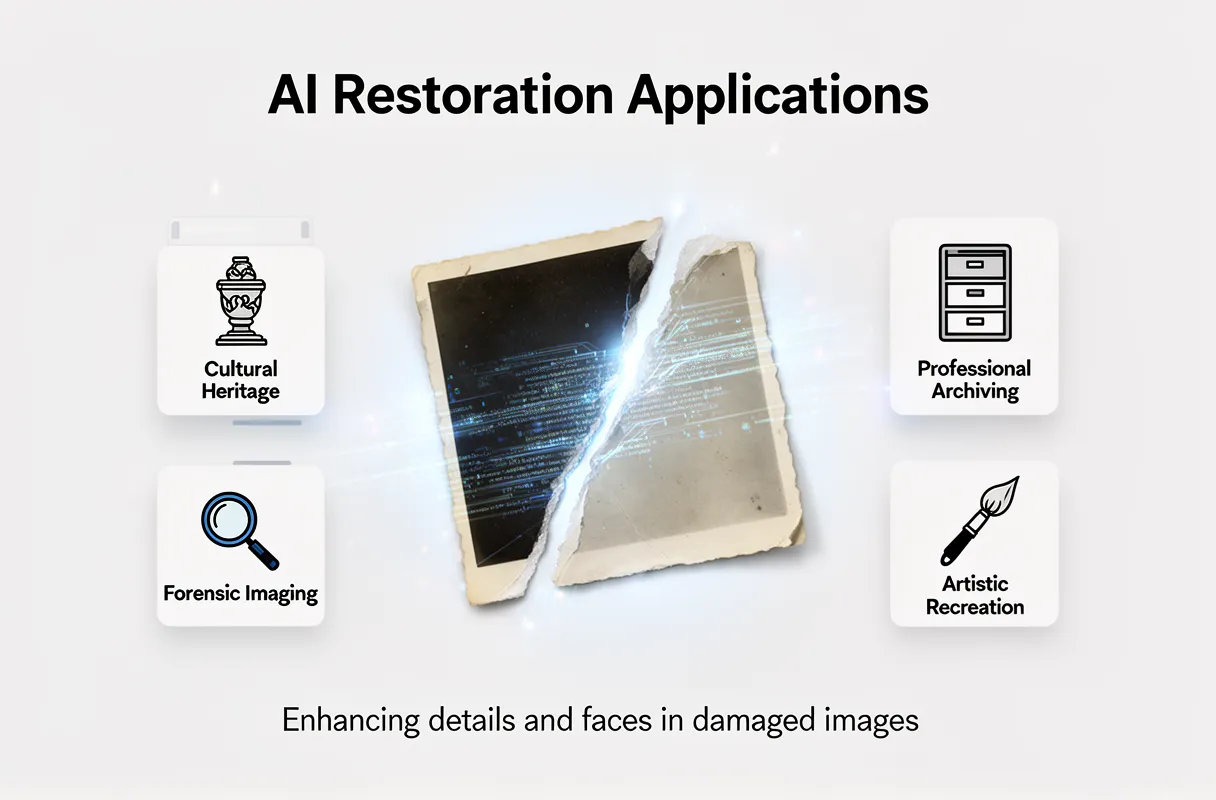
- Cultural Heritage Preservation: Museums and archives use AI to restore faded documents, historical photographs, and artwork, making precious artifacts accessible for study and public viewing.
- Forensic Imaging: Law enforcement agencies employ AI to clarify damaged or low-quality evidence images, potentially revealing crucial details like faces or license plates that would otherwise be lost.
- Professional Archiving: Businesses and institutions can use AI to digitize and restore vast collections of old records, ensuring long-term preservation and easy retrieval.
- Artistic Recreation: Artists can leverage AI to reimagine historical images, blending old and new aesthetics for contemporary creative projects.
Beyond general restoration, AI excels at targeted enhancements, particularly for human faces. This capability can revive the expressiveness in a child's smile or the wisdom in an elder's eyes, adding a profound emotional layer to the restored image.
However, this power comes with ethical responsibilities. The ability to alter and enhance images raises concerns about accuracy and potential bias. We must consider the implications of these tools as we move forward.
Using AI for Your Damaged Photos
Scanning your precious physical photos at a 90-degree angle is the first vital step for superior AI restoration. Ensure clear focus and good lighting, avoiding shine, and orient them correctly for the best results.
Next, upload your scanned, damaged image directly to the BringBack AI tool. Our sophisticated AI instantly analyzes the specific damage – whether it’s cracks, fading, or discoloration – and applies precise, targeted repairs within seconds.
Finally, review your revitalized, high-resolution restored photo or even an animated video. You can then easily download your cherished memories and share them with family and friends. Ready to bring your old photos back to life? Start your revive your treasured memories today.
For your peace of mind, many AI services, including ours, implement strict data safety guarantees. We ensure uploaded images are deleted within 24 hours after processing, safeguarding your personal history.
Navigating the Ethical Landscape and Future of AI Restoration
AI photo restoration tools face complex ethical questions. The risk is subtle alteration of features and the imposition of modern beauty standards. This often stems from biased datasets, particularly from 'WEIRD' countries. A 2010 analysis found that 96% of research subjects in top psychology journals came from Western, Educated, Industrialized, Rich, and Democratic societies. This data bias means AI might unintentionally erase historical and cultural accuracy in its restorations.
The ownership of restored images becomes murky when AI introduces 'hallucinated' details. This can lead to images that are no longer entirely truthful representations of the past. Such alterations pose a long-term challenge for digital archives. Navigating these ethical concerns requires careful consideration of the training data and the potential impact on historical records. Read more about these complex issues on the ethical concerns surrounding AI's potential to subtly alter features and impose modern beauty standards, especially when trained on biased datasets like 'WEIRD' data, citing the analysis that 96% of research subjects came from these countries and its implications for historical and cultural accuracy.
Future Trends and Ongoing Problems
The future of AI photo restoration promises even greater capabilities. We are seeing research in real-time processing for instant results and handling more extreme damage, like severe tears and fading.
Expert Opinion: "The next frontier is AI that understands context, not just pixels. It needs to grasp intent and historical nuance to restore authentically."
This ongoing research aims to push the boundaries of what's possible, making AI photo scratch removal and general restoration more powerful and nuanced.