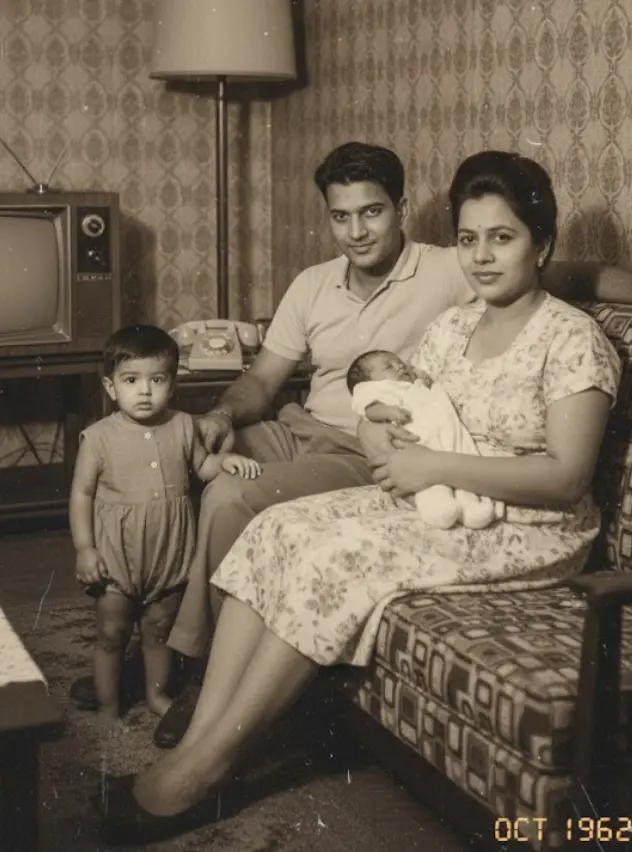
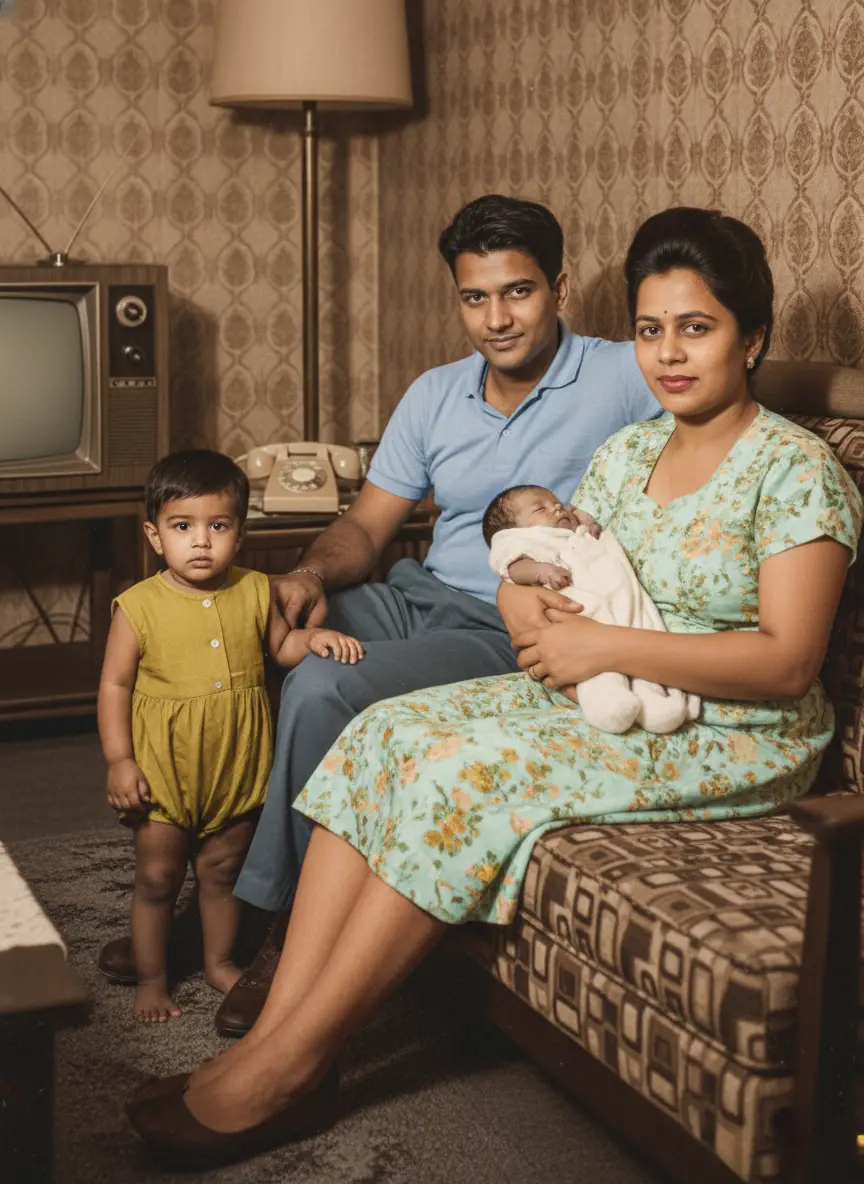
Yes, these days with advance AI technology, you can of course restore your old photos to almost true colors.
Grandparents, parents, cherished moments from your own childhood – all now a blurry, sepia-toned whisper of the past.
It’s a gut-wrenching feeling, isn’t it? Seeing those irreplaceable memories slowly slip away, losing their vibrancy and detail to time. We’ve all been there, wondering if there’s any way to truly bring them back.
Many people wonder if AI can genuinely restore those original colors and breathe life back into precious old photos.
We believe the answer is a resounding yes.
At BringBack, we’ve harnessed advanced AI colorization and photo restoration to do just that. We transform those monochrome echoes into vivid, emotional connections.
Imagine seeing your great-grandmother’s wedding dress in its true hue, or the vibrant flowers from a long-ago family picnic. It’s more than just adding color; it’s about making family history feel alive again.
Our tools don’t just guess; they intelligently recreate. We understand the debate around historical accuracy, but our focus is on delivering a “Nostalgic Hug” and creating “Live Portraits” that make your nostalgia tangible.
Here’s exactly how it works.
Understanding AI Colorization: More Than Just a Filter
AI colorization is not a generic filter slapped onto your old photos.
Think of it as teaching a computer to paint.
- Deep learning models are the key.
- These algorithms are fed massive datasets of color images.
- The AI studies these images, learning to predict what colors should be applied to grayscale photos.
It’s like a painter spending years studying thousands of paintings to understand color theory. Except, it’s a computer doing the learning—breathing new life into your cherished memories.
A Brief History of Colorizing Images: From Hand-Tinting to AI
The quest to add color to photos isn’t new. The history of color photography is surprisingly long.
- It started almost as soon as photography was invented.
- Hand-tinting was common, where artists painstakingly applied paints and dyes to black and white prints.
Then came James Clerk Maxwell’s groundbreaking experiment in 1861. He used red, green, and blue filters to create the first durable color image. A huge step.
By 1935, Kodak’s Kodachrome made color photography accessible to everyone.
Early computer colorization attempts began in the 70s and 80s, using simpler color mapping. It wasn’t until recently that deep learning truly revolutionized the field.
Early Computational Colorization: The Precursors to AI
Before the deep learning revolution, computational colorization was a different beast altogether.
Early attempts relied on simpler algorithms like color mapping based on luminance values.
- These algorithms assigned colors based on the grayscale tone.
- Lighter areas might become blue, darker areas brown.
The results were often unnatural and simplistic. These early methods struggled with complex scenes.
Subtle color variations? Forget about it.
They simply lacked the “intelligence” to understand context and relationships within an image. It was a start, but far from perfect.
How AI Colorization Works: The Deep Learning Revolution
Modern AI colorization relies on sophisticated AI algorithms like Convolutional Neural Networks (CNNs) and Generative Adversarial Networks (GANs).
- CNNs learn color and texture patterns from millions of color images.
- They apply these learned patterns to grayscale images.
- Think of them as learning to “see” color based on shapes and tones.
GANs are even more clever. They use two neural networks in a constant duel:
- A generator creates color images from grayscale inputs.
- A critic judges if the generated image looks real or fake.
It’s like an artist and an art critic working together, constantly improving the final result. This GAN approach iteratively improves the realism of the colorized photo, delivering more vibrant results for your precious memories.
The Technical Deep Dive: Loss Functions and Advanced Architectures
How do these AI models actually learn?
It comes down to loss functions. These functions measure the difference between the AI’s color guess and the “real” color in its training data. A smaller difference means a better guess, so the AI constantly adjusts itself to minimize this “loss.”
CNNs and GANs use different loss functions, like Mean Squared Error (MSE) for pixel-level accuracy or Perceptual Loss to make the image look realistic to the human eye.
Different GAN architectures also exist. CycleGAN is useful for translating between black-and-white and color images without paired examples, while Pix2pix excels at direct image-to-image translation.
Beyond these, other deep learning models are emerging:
- Variational Autoencoders (VAEs)
- Transformers
Each offers unique strengths for specific colorization challenges. The field is constantly evolving, with new architectures improving results all the time.
The ‘Ill-Posed Problem’ of AI Colorization
Let’s be real: it’s not perfect.
AI colorization is what experts call an “ill-posed problem.”
Sounds complicated, right? It just means there’s not one single “right” answer. Think about a black and white photo of a building.
- Was it brick red?
- Maybe white?
- Or even blue?
Multiple color combinations could be plausible. The AI has to make an algorithmic guess. This color ambiguity is a core AI limitation. So, while the technology is impressive, remember it’s filling in the blanks.
Challenges and Limitations: Algorithmic Bias and Accuracy
AI colorization isn’t flawless. Algorithmic bias is a major concern.
- Imbalances in training data can cause misrepresentation.
- Skin tones might be lightened incorrectly.
- Dominant color palettes might be favored, skewing historical results.
Accuracy is another hurdle. Without manual verification, historical or cultural context can be missed. Intricate details can be lost. Colors can appear dull or unrealistic.
Some studies suggest that up to 30% of AI-colorized images may not accurately reflect the original scene. These AI limitations are real. We work to minimize these issues, but awareness is key.
Mitigating Bias and Ensuring Responsible Usage: Best Practices
How can we ensure responsible usage?
Follow these steps for ethical colorization:
- Review the results critically. Does the colorization align with historical context? Are skin tones accurately represented?
- Consult historical sources. Cross-reference with other images, documents, or expert input.
- Use diverse datasets. Ensure training data reflects a wide range of ethnicities and cultures to reduce skewed outcomes.
- Adjust settings carefully. Many tools let you tweak color palettes and biases. Experiment to achieve the most accurate result.
- Document your process. Be transparent about the AI’s role and acknowledge potential limitations.
By following these guidelines, we can strive for accuracy verification and promote responsible AI practices.
The Human Element: The Role of “Human-in-the-Loop”
AI can do amazing things, but expert oversight is still crucial for the best possible results.
This is where the “human-in-the-loop” comes in.
- Human experts refine AI-generated colors.
- They correct errors.
- They ensure historical and cultural accuracy.
The AI provides a first draft; the expert polishes it. For example, an expert might know a particular military uniform was a specific shade of green that the AI missed. With expert oversight, these details come to life.
It’s about achieving a balance between automation and accuracy.
Case Studies: Successes, Failures, and Lessons Learned
What happens when AI colorization meets the real world? Let’s look at some examples.
Restoring Historical Documents: A Triumph
Consider a project to colorize World War I-era posters. The AI helped identify the original colors of uniforms and flags, creating striking visuals that gave the posters new life. History felt more accessible, and the project analysis revealed the power of AI to enhance engagement.
The Perils of Art Restoration: A Cautionary Tale
Now, for a cautionary tale. A museum attempted to restore a famous painting using AI. The AI added colors that were inconsistent with the artist’s original style, and art critics were not impressed. The lesson? AI is a tool, not a replacement for human expertise, especially in fields like art restoration that require deep historical knowledge.
Lessons Learned: The Path Forward
AI colorization is powerful, but it requires careful consideration. Human oversight is essential, and ethical considerations matter. By studying past AI colorization projects, we can refine our approach to deliver more accurate and meaningful results.
The Ethics of Altering History: A Deep Dive
Is it right to change historical artifacts? This question sparks heated debate.
- Historians worry about accuracy. Altering images can distort the past, and AI might introduce bias that skews historical interpretations.
- Artists see AI as a tool for creative expression. They might argue that colorization makes history more engaging and connects with modern audiences.
- Technologists focus on innovation, sometimes pushing boundaries before ethical considerations are fully addressed.
These different viewpoints create tension with no easy answer.
Then there are the copyright implications. Who owns an AI-colorized image?
- Is it the original photographer?
- The AI developer?
- The person who ran the AI?
Legal considerations are complex, as existing laws may not cover AI-generated art. We believe in educating people about the ethics of AI so this technology can be used responsibly.
BringBack: Reconnecting with the Past Through Color and Animation
Want to easily colorize and animate your old photos?
BringBack offers a seamless way to breathe new life into your cherished memories. It’s more than just photo restoration; it’s about forging a deeper emotional connection to your past.
Our “Nostalgic Hug” feature intelligently restores colors and enhances details, making each photo feel reborn.
Our “Live Portrait” feature uses AI animation to bring your loved ones to life. See their smiles move. Watch their eyes twinkle. It’s like they’re right there with you again.
We understand the importance of privacy, and your memories are safe with us. We’re also committed to keeping BringBack affordable, because everyone deserves to experience the joy of seeing their family memories reborn.
The Future of AI Colorization: Personalized and Context-Aware
What does the future hold?
Imagine a world where AI colorization understands your family history. It knows the precise shade of your grandmother’s favorite dress or the exact colors of the flowers in your parents’ wedding bouquet.
That’s the potential of personalized colorization.
Context-aware AI will access historical databases, analyze clothing styles, and understand regional color palettes to improve accuracy.
“In the future, AI colorization won’t just add color,” says Dr. Evelyn Reed, a hypothetical AI historian. “It will become a time machine, offering a deeply researched reconstruction of the past.”
But challenges remain. “We need to address algorithmic bias head-on,” warns hypothetical AI ethicist Dr. Samira Khan. “Otherwise, we risk perpetuating harmful stereotypes.”
The societal impact is huge. Imagine textbooks and documentaries with accurately colorized images that immerse you in the past. As long as we proceed ethically, AI advancements like these can transform how we connect with history.
FAQ: Your Questions About AI Colorization Answered
Is AI Colorization 100% Accurate?
No. AI colorization is an educated guess, not a perfect science. Accuracy can vary depending on the photo and historical context.
How Much Does AI Colorization Cost?
Costs vary widely. Some tools are free, while others require a subscription. We built BringBack to be affordable so everyone can enjoy their memories.
Is AI Colorization Easy to Use?
Yes! User-friendliness is a priority. We designed BringBack with a simple interface so you can revive your photos in minutes.
What About Algorithmic Bias?
It’s a real concern. AI bias can skew results, which is why we actively work to mitigate this. Responsible AI is essential.
Can AI Colorization Fix Severely Damaged Photos?
It can help significantly. AI restoration can work wonders, but severe damage may still require professional human intervention. We offer both!
Will AI Colorization Replace Human Photo Restorers?
No. Human expertise is still vital, especially for complex projects that need a nuanced, historical touch. AI is a powerful tool, not a replacement.